Press Release: 11/25/2026
Get to Know Robinson+Cole’s Amy Crafts
Press Inquiries
If you have any questions or would like to be in touch with the BBA press office, please contact:
Ron Simms, Jr.
Director of Communications
After more than a decade at the Massachusetts Attorney General’s Office, including leading the False Claims Division, Amy Crafts, has joined Robinson+Cole’s Boston office. We spoke with her about the move to private practice, enforcement trends in healthcare and life sciences, and her advice for women pursuing careers in government investigations.
After more than a decade at the Attorney General’s Office, including leading the False Claims Division, what made this the right time to move into private practice, and why Robinson+Cole?
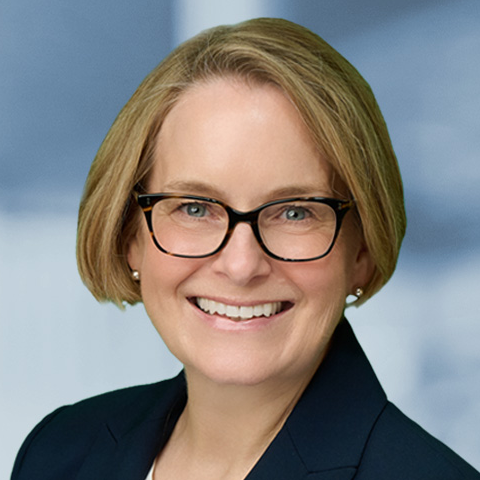 After spending more than a decade in the Attorney General’s Office, I felt I had developed a deep understanding of how enforcement agencies investigate matters, evaluate risk, and approach litigation. I was excited about the opportunity to apply that experience in a new way by helping businesses and organizations navigate increasingly complex regulatory and enforcement environments. Robinson+Cole stood out because of its strong litigation platform, collaborative culture, and commitment to strategic growth in Boston. It was an opportunity to join a team that shares my focus on providing practical, sophisticated counsel to clients facing high-stakes challenges.
What are you most looking forward to as you build your practice in the firm’s Boston office?
I’m looking forward to expanding my work with companies facing investigations, enforcement matters, and complex disputes. Boston is a dynamic market with a strong culture of innovation, and many organizations are operating in highly regulated environments. I am excited to work alongside colleagues across the firm’s practice areas to help clients navigate legal challenges that often require multidisciplinary solutions.
What enforcement trends should businesses in Massachusetts be watching right now, especially in healthcare and life sciences?
While all signs indicate the federal government will remain focused on healthcare fraud, I expect whistleblower, or qui tam, matters to be more frequently litigated by relator’s counsel in light of the reduced DOJ workforce. In addition, I will be closely observing when and how state AGs step in to fill emerging gaps in federal enforcement. In light of this landscape, businesses should remain focused on identifying potential issues early, strengthening internal controls, and ensuring they are prepared to respond effectively if regulators come calling.
How has the work of government investigations changed over your two decades in practice?
The recent focus on data analytics is one of the most significant changes I’ve seen over the course of my career. It’s a tool that allows the government to be more proactive in ferreting out fraud, and will likely lead to more government-initiated enforcement activity. At the same time, the qui tam landscape is also changing, with relators who have never worked for a defendant company basing their allegations on data mining efforts. How these cases develop in litigation, and the defenses raised in response to such efforts, will be a significant development in this practice area.
How do you see AI and other technologies changing investigations and compliance work, for enforcement agencies and for the clients you represent?
Technology is creating both opportunities and challenges. On one hand, AI and advanced analytics can help organizations identify patterns, monitor compliance, and review large volumes of information more efficiently. On the other hand, these tools raise important questions around governance, accuracy, and accountability. I expect businesses and regulators alike will continue focusing on how these technologies are used, what safeguards are in place, and whether organizations can demonstrate appropriate oversight of their systems and processes.
What advice would you give women lawyers who want to build a career in government investigations or white-collar work?
In my view, the most effective way to build a practice defending government investigations or focusing on white-collar matters is to spend some portion of your career working for the government in an enforcement or prosecutorial capacity. Experience conducting investigations from the government’s perspective enables you to understand how decisions are made, and that understanding is invaluable as you counsel clients facing investigations. In addition, for attorneys raising young children, working for the government can provide balance between work and home and typically provides a supportive and collaborative work environment.
You’ve been active across the BBA, on the Health Law Section Steering Committee, the Health Law Conference advisory committee, the Government Lawyers Forum, the Beacon Awards Event Committee, and the Boston Bar Journal Board of Editors. How has that involvement supported your practice and your connection to the Boston legal community?
The BBA has been an important part of my professional life, allowing me to build relationships with lawyers from different practice areas, sectors, and stages of their careers while staying engaged with emerging legal issues and developments. In addition, serving on various BBA Committees has given me the opportunity to organize, moderate and speak on panels, which is an important aspect of my business development efforts. My involvement with the BBA has helped me build connections that continue to enrich both my practice and my perspective.
What is your favorite autumn activity to do in Boston?
Fall is my favorite time in New England. As a parent of two active middleschoolers, most of my leisure time is spent on the soccer sidelines as both a coach and a spectator. It’s a fun phase of life and I love every minute.