Press Release: 11/16/2026
North Atlantic right whale population continues to struggle in latest update on the critically endangered species
Scientists say additional protection measures are vital for the species’ survival

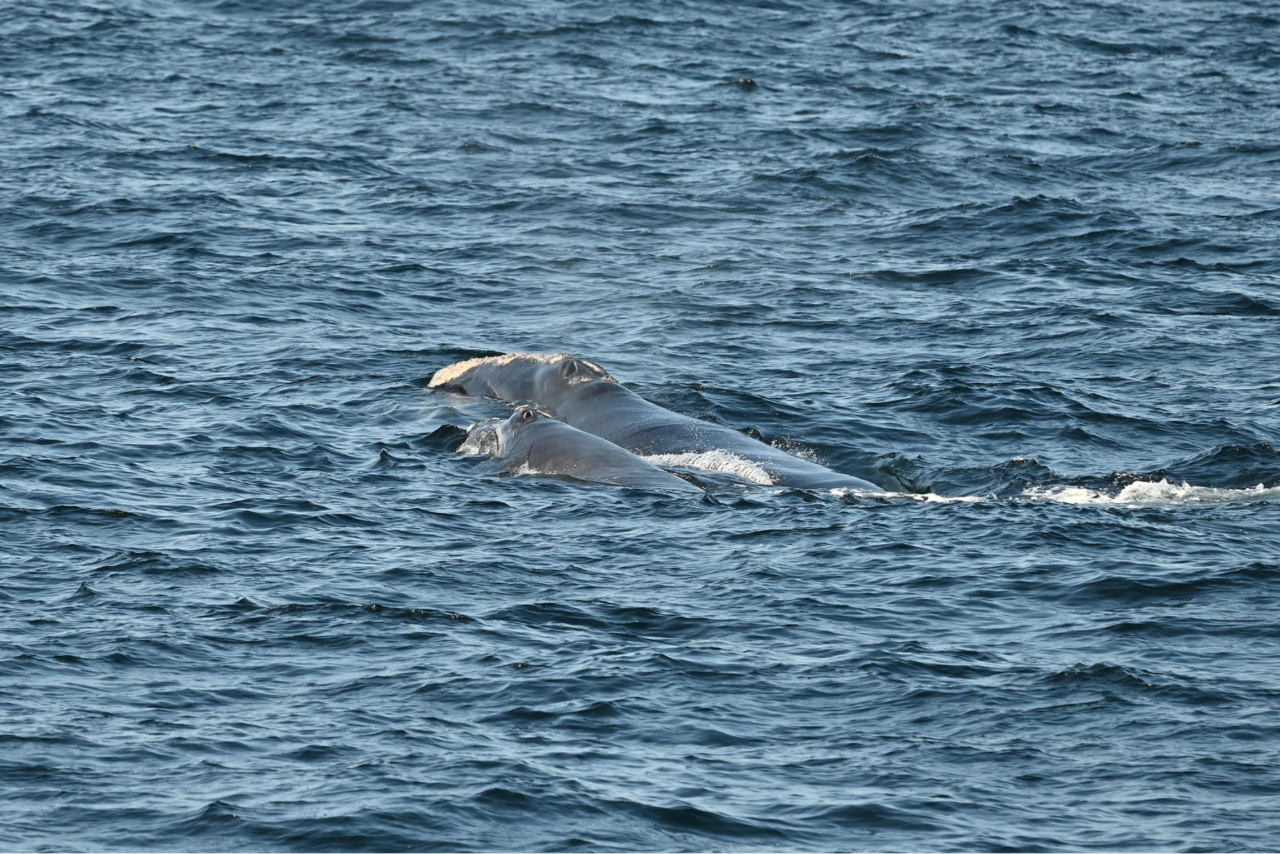
First-time North Atlantic right whale mom “Mirror” (Catalog #4617) and her 2026 calf are seen together in the Gulf of St. Lawrence on July 8, 2026. CREDIT: CANADIAN WHALE INSTITUTE/NEW ENGLAND AQUARIUM, UNDER DFO CANADA SARA PERMIT
BOSTON, MASS. (Nov. 16, 2026) – Scientists are expressing concern for the future of North Atlantic right whales after the latest population update showed the critically endangered species is continuing to struggle.
The North Atlantic Right Whale Consortium releases the updated population estimate for the species each year in coordination with its annual meeting, which is being held Nov. 16–17 in Halifax, Nova Scotia. Scientists from the New England Aquarium’s Anderson Cabot Center for Ocean Life and the National Oceanic and Atmospheric Administration (NOAA) collaborate to calculate the estimate. The estimate for 2025 is 382 (+/-11 range of error), representing a 1.8 percent decline in population size from the 2024 estimate, which was recalculated as 389 (+/-3). The estimated number of reproductive females held steady at 73 (+3/-2).
“The newly released right whale population estimate underscores that more work is needed to protect this species. The population is not yet on a clear path to recovery and is incredibly vulnerable to entanglements and vessel strikes, threats we know how to reduce. Recovery for this species depends on sustained protective actions in both the U.S. and Canada,” said Heather Pettis, who leads the right whale research program in the Aquarium’s Anderson Cabot Center and chairs the North Atlantic Right Whale Consortium.
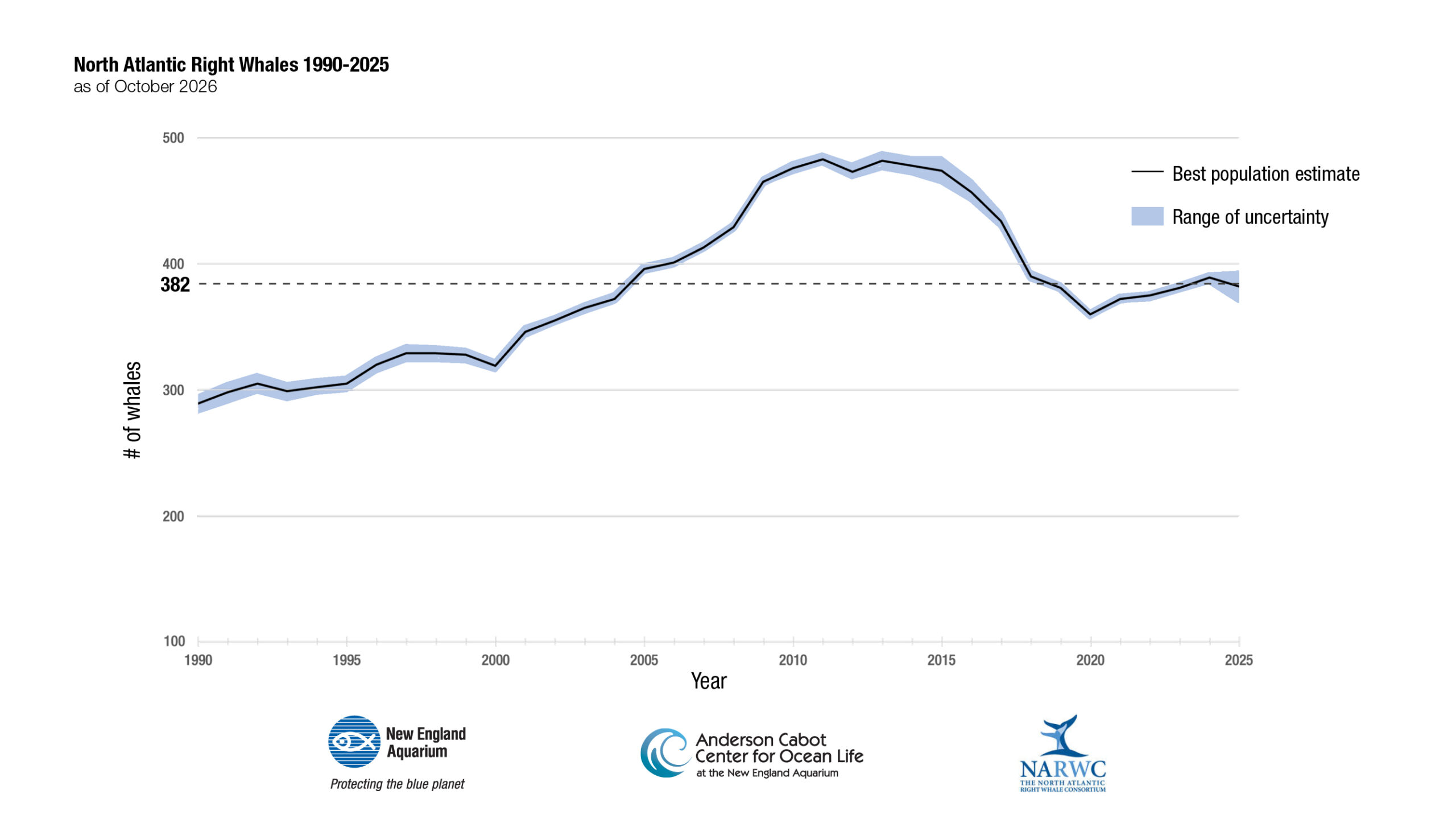
The 2025 right whale population estimate is 20 percent below its high of 483 in 2011. SOURCE: NORTH ATLANTIC RIGHT WHALE CONSORTIUM
Scientists are also sharing reports on the year’s right whale deaths, entanglements, and vessel strikes at this week’s Consortium meeting. So far in 2026, there have been two detected right whale deaths, one from an entanglement and one from an unknown cause. The carcass of 4-year-old male “Division” (Catalog #5217) was found off North Carolina on January 27following a serious fishing gear entanglement traced to Canadian snow crab gear. On February 10, a dead right whale was reported on a barrier island located off the eastern shore of Virginia that scientists in the Aquarium’s Anderson Cabot Center identified as a 3-year-old female. Her cause of death remains unknown.
In addition to the two deaths, there have been eight documented cases of human-caused injuries to right whales this year: seven entanglements and one vessel strike. These deaths and injuries come amid efforts to diminish or remove safeguards for right whales, including a Congressional bill that would extend the regulatory pause for additional whale protectionsuntil the year 2035 and regulatory changes that weaken the Endangered Species Act.
“Actions to further delay entanglement protections and deregulate vessel strike reduction measures will stall meaningful progress that is already underway to protect the species and ensure a thriving blue economy. Right whales cannot afford to wait any longer for adequate protection,” Pettis said.
Amid these ongoing human impacts, the 2025–2026 right whale calving season resulted in the most calves born since 2009, with 24 total—including a late addition sighted for the first time in Canadian waters in September 2026 born to mother “Silt” (Catalog #1817). Among the group were three first-time mothers: “Callosity Back” (Catalog #3760), “Mirror” (Catalog #4617), and unnamed right whale Catalog #4610.
“This is encouraging news in a species with relatively low reproductive success,” said Lindsey Jones, a scientist in the Aquarium’s Anderson Cabot Center who manages the North Atlantic Right Whale Catalog. “However, population growth depends on every calf being able to reach maturity free from human-caused harm such as ship strikes and entanglement in fishing gear and contribute to the next generation.”
“With 24 calves born this year, the whales are doing their part. But the overall lack of growth in the population is even more concerning when seen in the context of a number of proposed management setbacks in the U.S. this year. It’s disheartening to see our efforts to protect these animals backslide,” said Philip Hamilton, a senior scientist in the Aquarium’s Anderson Cabot Center.
Started in 1986, the North Atlantic Right Whale Consortium includes research and conservation organizations, shipping and fishing industries, technical experts, U.S. and Canadian government agencies, and state and provincial authorities, all of whom are dedicated to the conservation and recovery of the North Atlantic right whale. More than 400 in-person and virtual attendees from all over the world are expected for this week’s Consortium meeting in Nova Scotia. Following its meeting, the Consortium will draft a comprehensive annual report on the status of the species; survey, management, and research activities; and recommendations for action. The report will be available early in 2027 and published on the Consortium website.
MEDIA CONTACT: Pam Bechtold Snyder—psnyder@neaq.org