Press Release: 6/30/2026
Why High Energy Prices Will Plague Massachusetts for Years to Come
JUNE 29, 2026
Amid our recent harsh winter, Governor Maura Healey issued an immediate reduction of electricity bills by 25% across the state and a 10% gas bill reduction. However, these are temporary relief measures, as Massachusetts is forced to reconcile how it will address its aging infrastructure, fuel constraints, and the cost pressures placed on consumers.
Currently, Massachusetts’ retail electricity cost ranges from about $0.28-$0.32/kWh, which is about 40-60% higher than the US national average of $0.20/kWh. It is also a sharp increase from Massachusetts’ last recorded rate of $0.23/kWh in 2023, according to Pioneer’s DataLabs, which placed Massachusetts fourth highest nationally. Utilities company Eversource Energy has examined the increase in residential gas bill prices since 2015, breaking down bill components into four categories: maintenance and infrastructure, Gas System Enhancement Plan (GSEP), public benefits that support state-mandated programs (i.e. Mass Save), and supply. While each component has shown increases over the past ten years, public benefits rose 200% and supply related costs rose 175%.
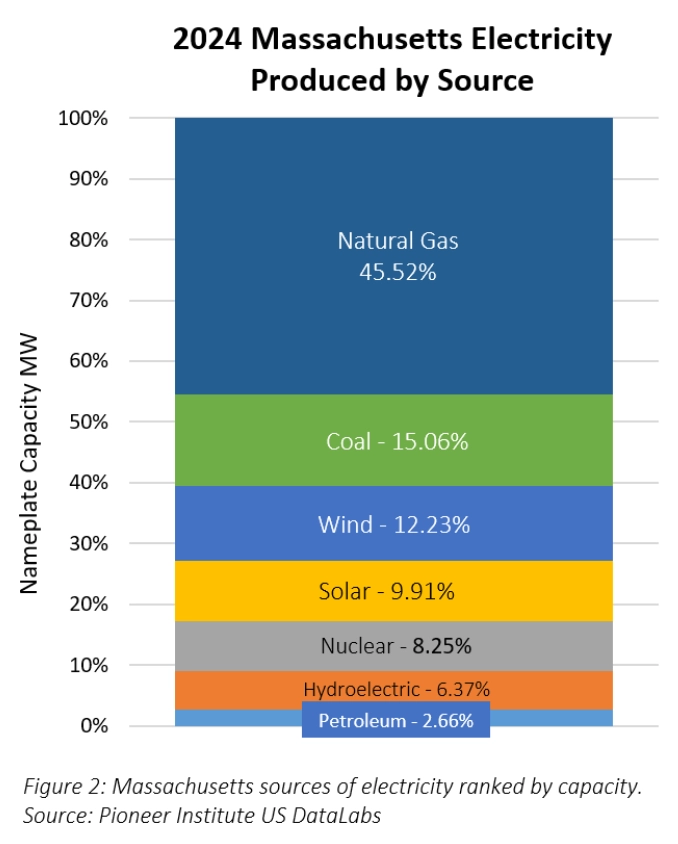
Several external shocks have contributed to price increases. Following the pandemic, energy demand rebounded rapidly while supply chains struggled to recover in the same way. Shortly after, the Russia-Ukraine war disrupted global natural gas markets, which drove natural gas prices to $9/MMBtu; this reflects an 85% increase in the cost of gasoline from a year earlier. Because of Massachusetts’ reliance on natural gas, which makes up about 45% of our fuel sources, our energy costs rose disproportionately due to the instability in the market and inflation pressures.
Additionally, the region’s infrastructure constraints exacerbated the energy price spike. ISO-NE, the organization responsible for managing the power grid, implemented market and reliability measures to address fuel shortages and maintain grid stability during peak demand – our winter months. However, the pipeline’s limited capacity and continued dependence on external sources of natural gas forced our prices to all-time highs.
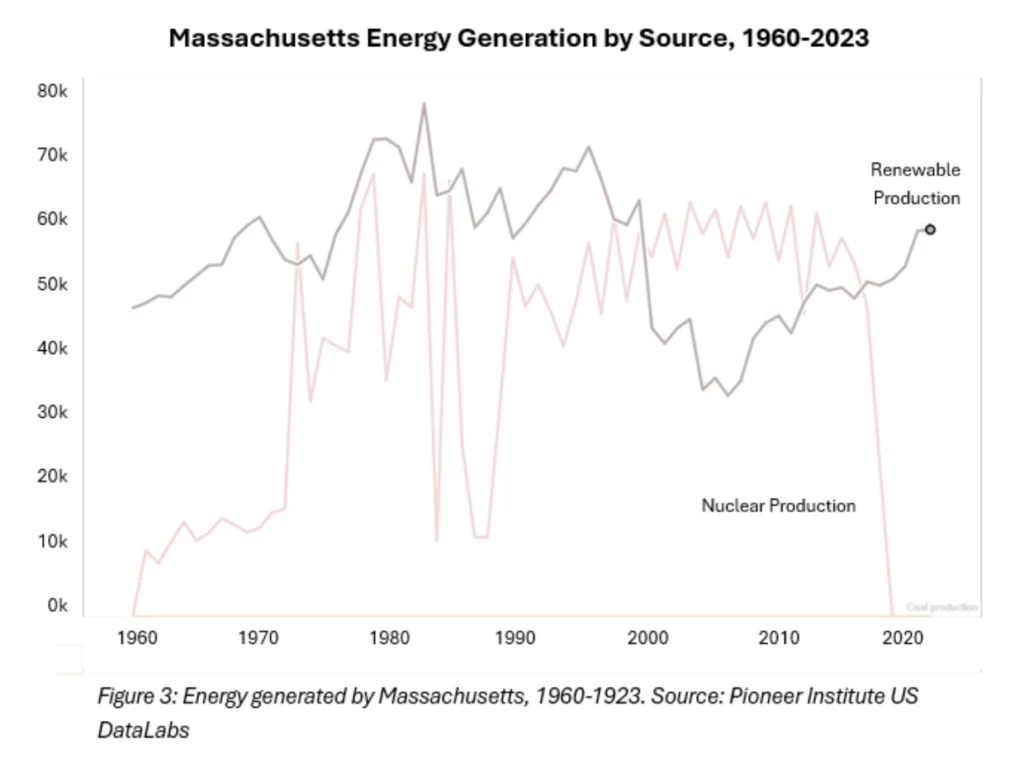
At the same time, Massachusetts phased out its final nuclear power plants in 2019. Although the state has aggressively pursued renewable energy expansion, renewable capacity has not fully replaced that previously provided by nuclear plants (see Figure 3).
When comparing Massachusetts to other states, one trend becomes increasingly clear: states with abundant energy production and efficient distribution systems tend to have lower electricity prices. These are states with access to large gas reserves or extensive renewable energy infrastructure to bolster their energy independence. Right now, Massachusetts ranks 20th and 36th, respectively, in solar and wind capacity, suggesting there is significant room for growth in line with the state’s ambitious clean energy goals.
There are a few options that the state might evaluate when looking to reduce long- term costs. One includes estimating the impact of regulatory structure on consumer costs. Massachusetts and other New England states, which also have high electricity prices, operate within a deregulated electricity market that allows consumers to choose their suppliers. By contrast, many fully regulated states in the South and Midwest tend to experience lower and more stable costs. While deregulated choices allow for consumer choice and competition, they also create room for scamming opportunities and variable price structure.
The future of energy in Massachusetts involves a difficult balance between affordability, reliability, public health, and environmental goals. Approximately 83% of Massachusetts voters want to “prioritize keeping energy costs low as possible” through stable and sustainable energy supply. In early 2026, the state renewed interest in using advanced nuclear and fusion energy through a partnership with UMass Lowell, partly in response to challenges with offshore wind development. Nuclear energy could help curtail rising electricity prices with reliable, cheaper production, especially as energy demand is expected to grow 40% over the next two decades.