Press Release: 3/24/2026
Healey-Driscoll Administration Awards Over $250,000 to Help Communities Manage Stormwater Pollution
FOR IMMEDIATE RELEASE:
3/23/2026
MEDIA CONTACT
Lauren Moreschi, Director of Communications
Phone
Call Lauren Moreschi, Director of Communications at 857-443-1218
Online
Email Lauren Moreschi, Director of Communications at lauren.moreschi2@mass.gov
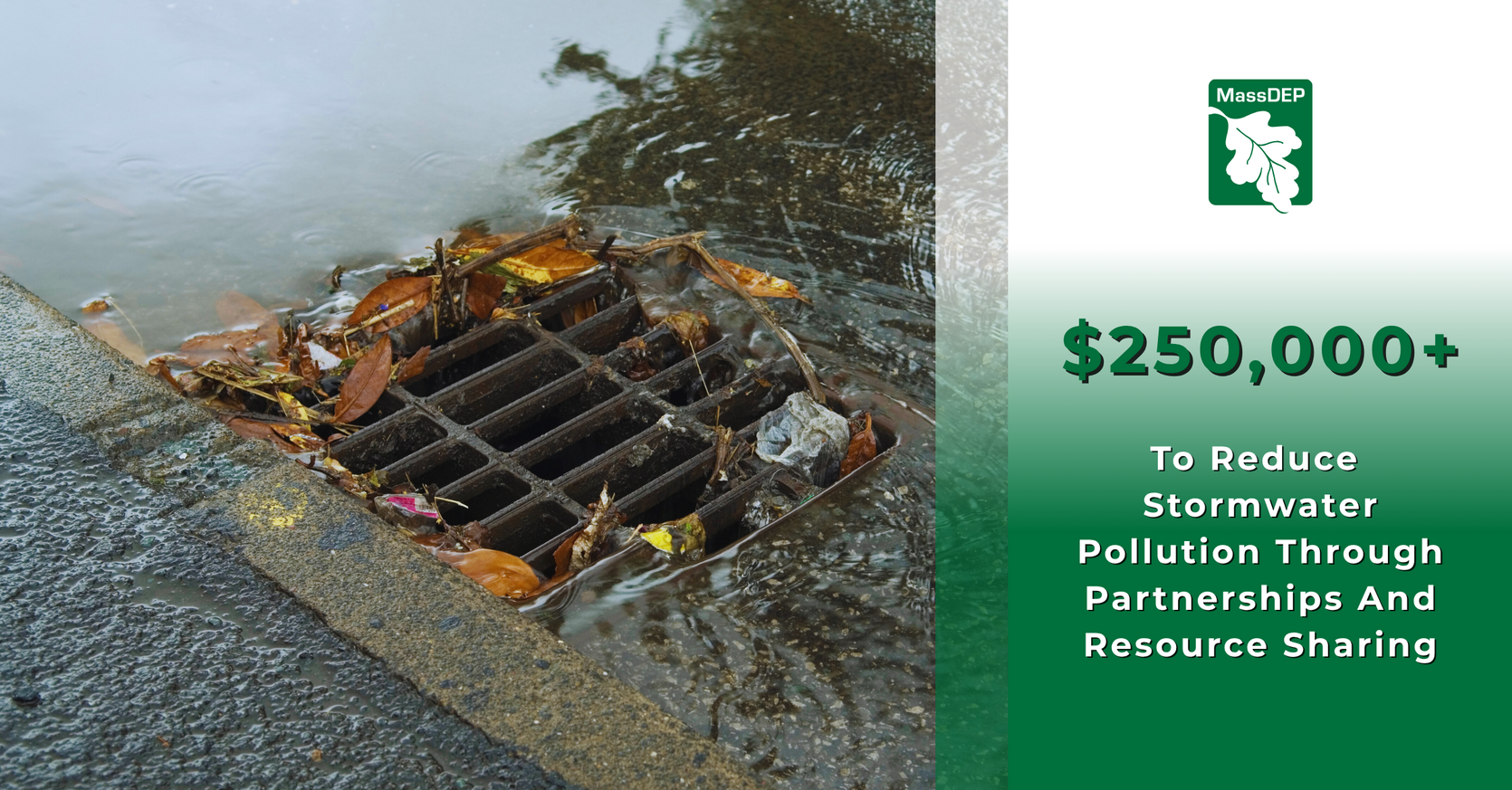
BOSTON — The Healey-Driscoll Administration today awarded $267,000 to seven regional watershed coalitions and planning collaboratives to help communities better manage stormwater and keep harmful pollution out of Massachusetts waterways.
Stormwater is created when rainwater and snow melt flows over hard surfaces like pavement, collecting pollutants like oil from roadways and bacteria from pet waste. This polluted stormwater runoff travels through storm drains directly into rivers, lakes, and other waterbodies—harming water quality and limiting fishing, boating, and swimming. The funding enables regional watershed coalitions and planning collaboratives to develop innovative programs to limit pollution, better detect illicit discharges, manage construction site runoff, and enhance public education and participation in stormwater management.
“Stormwater is one of the biggest drivers of pollution in our waterways,” said Energy and Environmental Affairs Secretary Rebecca Tepper. “These grants strengthen our commitment to protecting water quality by empowering communities to take action where it matters most so we can deliver real, measurable improvements for everyone.”
“This funding empowers our cities and towns to stop harmful bacteria and pollutants before they enter waterways,” said MassDEP Commissioner Bonnie Heiple. “By supporting proactive stormwater management and better controlling sediment, litter, and waste, we’re tackling pollution at its source. Keeping our storm drains clean is one of the best ways to keep our rivers and lakes clean and healthy.”
The awarded projects will help communities meet the requirements of the Municipal Separate Storm Sewer System (MS4) permits that are required to manage stormwater discharges and prevent pollutants from entering storm sewer systems. 260 Massachusetts municipalities are subject to the MS4 permit. The MS4 Permit is issued by the EPA under the Clean Water Act National Pollutant Discharge Elimination System (NPDES), and the projects are selected by the Massachusetts Department of Environmental Protection (MassDEP).
The groups receiving funding are:
Berkshire Regional Planning Commission (BRPC) — $63,225
- The BRPC will work with the Pioneer Valley Planning Commission (PVPC) and Waterstone Engineering to improve stormwater planning tools for local communities. The project will add new stormwater management designs, create a practical guide to help communities choose the right solutions for specific locations, update cost estimates and provide training for municipal staff on the planning tools. MS4 representatives, as stormwater officials, will help shape the work to ensure the tools are user-friendly and effective for public infrastructure projects.
Charles River Watershed Association — $55,480
- The Charles River Watershed Association will help install stormwater controls to help reduce nutrient pollution in the Charles River Watershed. A technical advisory committee and consultant will work to build public-private partnerships that allow municipal stormwater to infiltrate on private land. Participating communities will also pilot a low-cost database to track stormwater controls for municipal reporting.
Greenscapes North Shore Coalition — $17,212
- The Greenscapes North Shore Coalition will conduct public outreach activities to address and reduce pet waste pollution. And will also implement regional solutions that combine a high visibility public signage campaign with stormwater education and regional advocacy to reduce pet waste pollution and support MS4 compliance for North Shore Communities.
Merrimack Valley Planning Commission (MVPC) — $33,500
- The MVPC will expand its regional stormwater mapping tool, the LID Viewer, to help municipalities identify priority sites for management, reduce flooding risks and move projects closer to funding and implementation. MVPC will work directly with municipal staff through surveys and outreach to confirm existing data, track progress and identify top stormwater mitigation opportunities. The project will also update the LID Viewer to keep it a strong planning tool for building resilience across the Merrimack Valley.
Neponset River Watershed Association & Neponset Stormwater Partnership — $41,860
- The proposed project will create and/or adapt standardized design details for green stormwater infrastructure features and develop a framework for identifying key factors, tradeoffs, champions, and policies around retrofitting priorities in lead partner towns so that retrofitting can be routinely incorporated into other infrastructure maintenance projects. This framework will serve as a model to help other Neponset Stormwater Partnership communities implement a similar approach.
Massachusetts Statewide Municipal Stormwater Coalition (MSMSC) — $16,000
- The MSMSC will translate public education graphics, flyers and social media posts from the Think Blue MA Education and Outreach toolkit into four non-English languages. The project will also include updating the Think Blue MA website to include newly translated materials as well as updating the Spanish version of Think Blue MA website.
Old Colony Planning Council — $39,935
- The Stormwater Partnership Pilot will bring together Abington, Bridgewater and Plympton to build a shared stormwater asset inventory and develop peer-to-peer training for municipal staff. Through GIS mapping, field assessments and joint workshops, the project will strengthen local capacity to meet MS4 permit requirements. The initiative will also create public outreach materials and prioritization tools to guide future infrastructure improvements.