Press Release: 2/11/2026
Discipline and Global Competition Define the Road Ahead for Biotech
FEB 10, 2026
Takeaways from MassBio’s 2026 Economic Outlook Forum
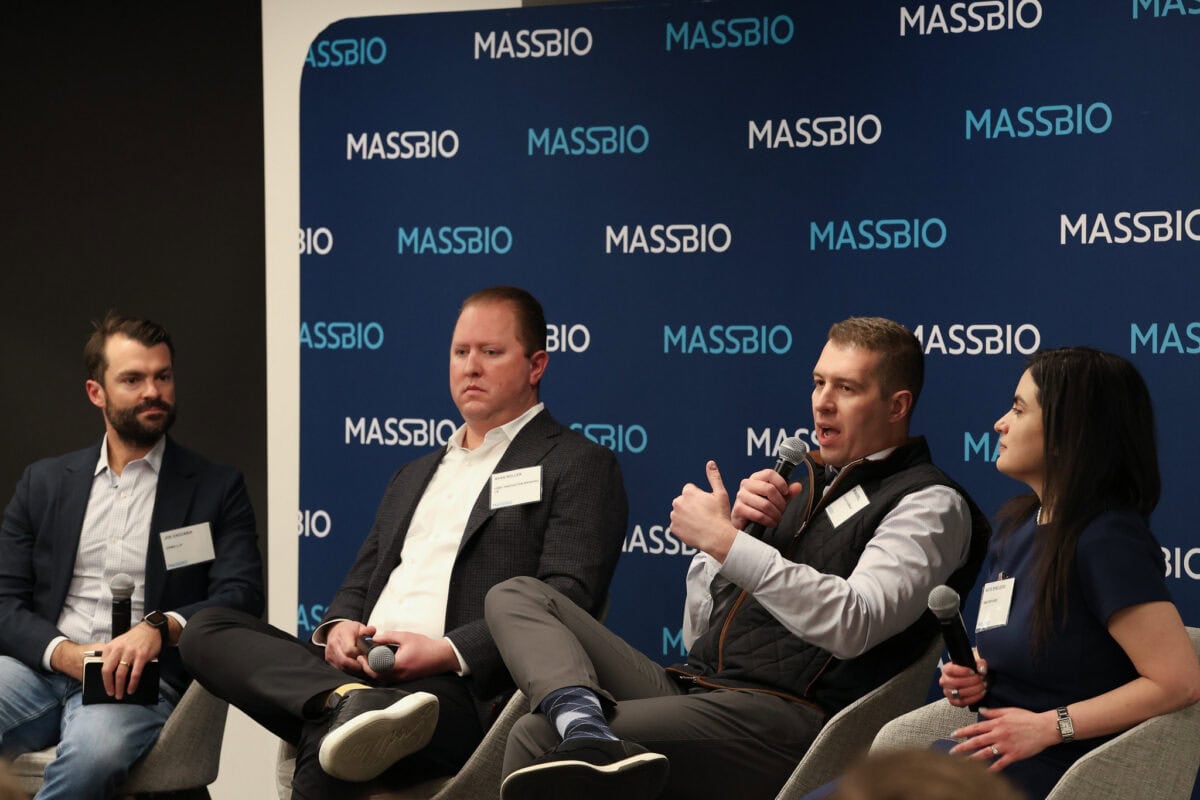
MassBio’s 2026 Economic Outlook Forum featured a panel discussion moderated by Joe Zaccaria of KPMG (left), with panelists Ryan Roller (HSBC Innovation Banking), Jim MacKrell (Lilly Ventures), and Katie Bodner Spielberg (5AM Ventures).
Coming off the heels of the JP Morgan Healthcare Conference, MassBio’s 2026 Economic Outlook Forum brought together leaders from venture capital, pharma, and innovation banking to assess the state of the biotech industry. The mood? What MassBio has been calling thoughtful optimism: a recognition that after a few difficult years, the industry has real reasons for confidence but is choosing to be deliberate about how it moves forward. “Last year was probably driven more on hope,” MassBio’s Jason Cordeiro told the room. “We’ll be thoughtful this year, because we have some good things that were working.”
The evening’s conversation, moderated by Joe Zaccaria of KPMG and featuring Katie Bodner Spielberg of 5AM Ventures, Jim MacKrell of Lilly Ventures, and Ryan Roller of HSBC Innovation Banking, made clear that the real story of 2026 is not simply about optimism returning. Two forces dominated the discussion: the discipline reshaping how capital flows through the ecosystem, and the intensifying global competition with China that is forcing the industry to rethink its strategies.
Discipline Is Defining How Capital Moves in 2026
The word that came up most often on the panel was discipline: how capital is being deployed, how companies are being built, and how deals are getting done.
On the funding side, total venture capital investment in Massachusetts biotech fell to its lowest level since 2019, and the number of companies receiving funding dropped from 215 to 187. That concentration is showing up in the shape of deals: mega-rounds of $100 million or more are becoming common even at Series A, as investors seek to finance companies through early clinical data. A new company formation model is also taking hold: the in-licensing of ex-US assets, with upfront payments alone sometimes rivaling a traditional Series A.
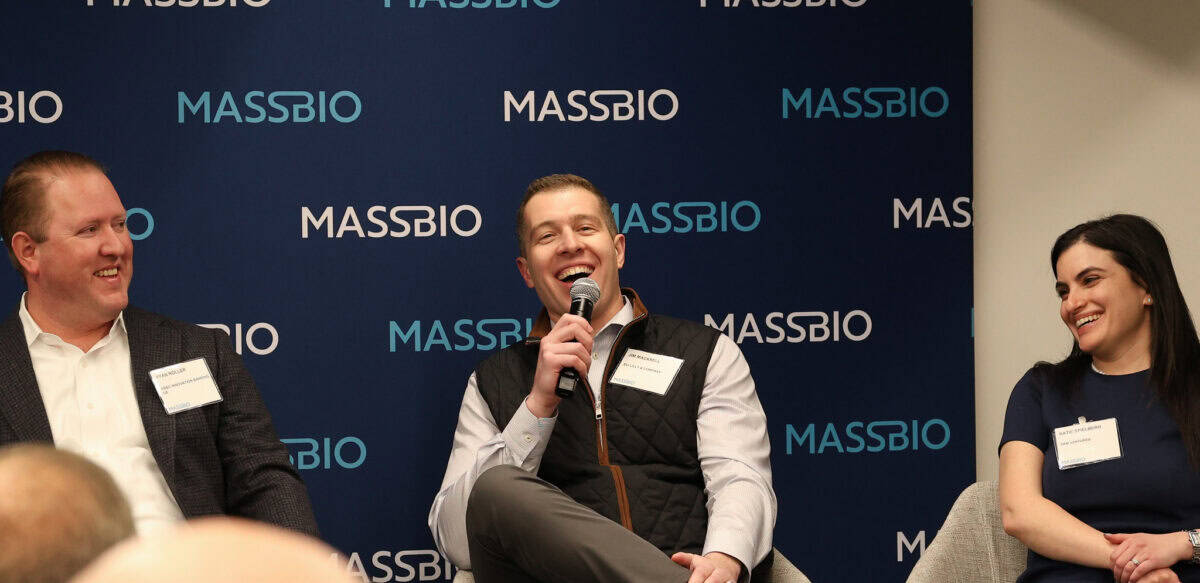
Jim MacKrell (Lilly Ventures)
Encouragingly, the risk-off environment that defined recent years is beginning to ease. First-in-class programs and novel targets are attracting capital again. “Capital efficiency is your friend … pick one indication,” said Jim MacKrell of Lilly Ventures, capturing the discipline that investors now expect.
The IPO window is showing signs of opening, with phase 1 and pre-data companies in the current pipeline. But this is not a return to the COVID-era environment. Companies need robust clinical data to access the public markets, and many are finding they can stay private longer while still securing capital through private rounds and partnerships.
Running through these dynamics is a set of unresolved policy questions. NIH funding is beginning to sort out, but uncertainty around the FDA persists. Continued threats to SBIR funding add to the challenge. For biotech leaders, discipline is not just a strategic preference; it is a response to an environment where the rules are still being written.
AI Has Moved from Hype to Infrastructure
The panel’s consensus: AI is now table stakes across the development lifecycle. On the discovery side, novel molecule and compound design is driving near-term value. Downstream, tools for patient identification, clinical trial recruitment, site selection, and regulatory document writing are becoming essential, particularly for smaller biotechs without full data science teams.
MacKrell pointed to Lilly’s partnership with NVIDIA as a statement of commitment, even as large pharma is still working out exactly where AI will generate the most value. The near-term promise, he suggested, may be less about revolutionary breakthroughs than about speed: “Maybe it helps the failures happen faster so that we can move on to more productive things.”

Katie Bodner Spielberg (5AM Ventures)
Katie Bodner Spielberg highlighted an emerging landscape of AI business models: foundation models that are open or partially open source, companies building trust as first-to-market partners in specific applications, and an evolving question of whether the right model is software-as-a-service, discovery-as-a-service, or platform-based partnering. The panel leaned toward best-in-class point solutions over a single end-to-end provider, with the strongest opportunities going to companies that have built vertical expertise on proprietary datasets.
And there is a market signal worth noting: “Anything with AI involved is probably more likely to IPO today rather than just a traditional therapeutics company,” observed Ryan Roller.
The China Question Demands Our Attention
If there was one topic that no one at JPM could avoid, it was China. At MassBio’s forum, the discussion went deep. It is a conversation MassBio intends to keep driving.
The dynamics have shifted fundamentally. China’s biotech ecosystem is no longer producing me-too molecules. It is advancing complex antibodies, bispecific antibodies, ADCs, and first-in-class mechanisms. “The speed in which the ecosystem in China has changed over just five years is just kind of breathtaking,” said Roller, who lived in China in 2019 while building out a life sciences practice for another financial institution.
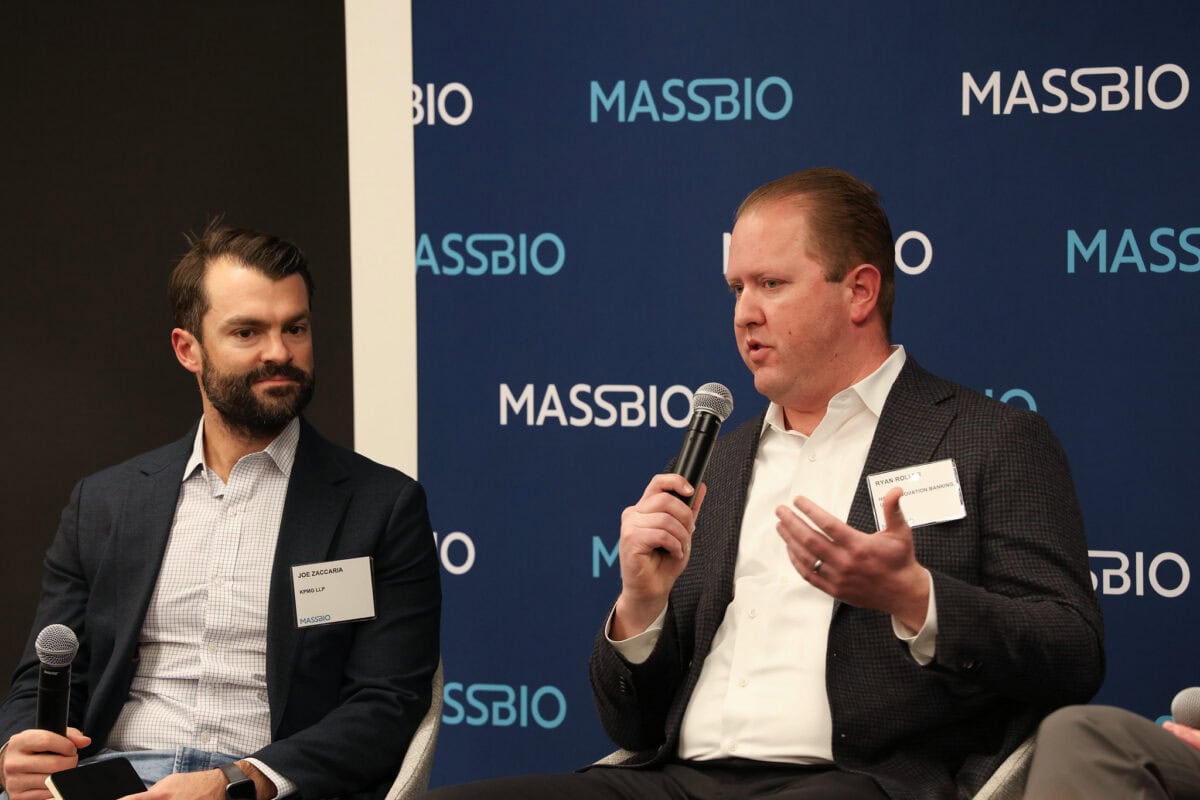
Ryan Roller (HSBC Innovation Banking)
For US-based biotechs, the competitive implications are immediate. “If you’re a US-based biotech company working on a fast-follower program, you have to imagine that there’s at least 10 competitors in China,” warned Bodner Spielberg. Many of those competitors are invisible until patents publish or deals are announced, which is driving US companies to stay in stealth mode longer.
MacKrell offered a more layered view, arguing that while China has applied engineering innovation to achieve remarkable speed, the US and specifically the Boston ecosystem retains significant advantages: a mature capital markets system, decades of entrepreneurial infrastructure, and a depth of novel biological insight that China has not yet replicated. He also noted that China’s end market remains the US and Europe, which makes partnership the likely near-term path.
The panel raised practical policy questions that deserve more attention: the tangible differences between IND processes in the US versus China and Australia, the 18-month patent publication window that gives Chinese competitors a head start, and the need for the US to reduce its own regulatory barriers rather than simply focus on restricting China’s access.
Looking Ahead
As the panelists offered predictions for 2026, the themes of the evening came into focus. Roller anticipates at least five pre-revenue biotech IPOs in Hong Kong. MacKrell pointed to cell-specific delivery and control as the scientific breakthrough area to watch. Bodner Spielberg expressed optimism about a renewed focus on rare disease and predicted at least a doubling of US companies running first-in-human trials in China.
The advice for biotech leaders was consistent: stay energized, start fundraising conversations early, build investor relationships well ahead of a formal process, and prepare for everything to take longer than expected. For platform companies, the bar has shifted. Having a clearly delineated first therapeutic asset is no longer optional. Massachusetts’ biotech ecosystem has weathered difficult years before, and it will navigate the complexities ahead. The discipline this industry is showing is not a retreat — it is how you build an ecosystem that can sustain the next wave of innovation for patients.
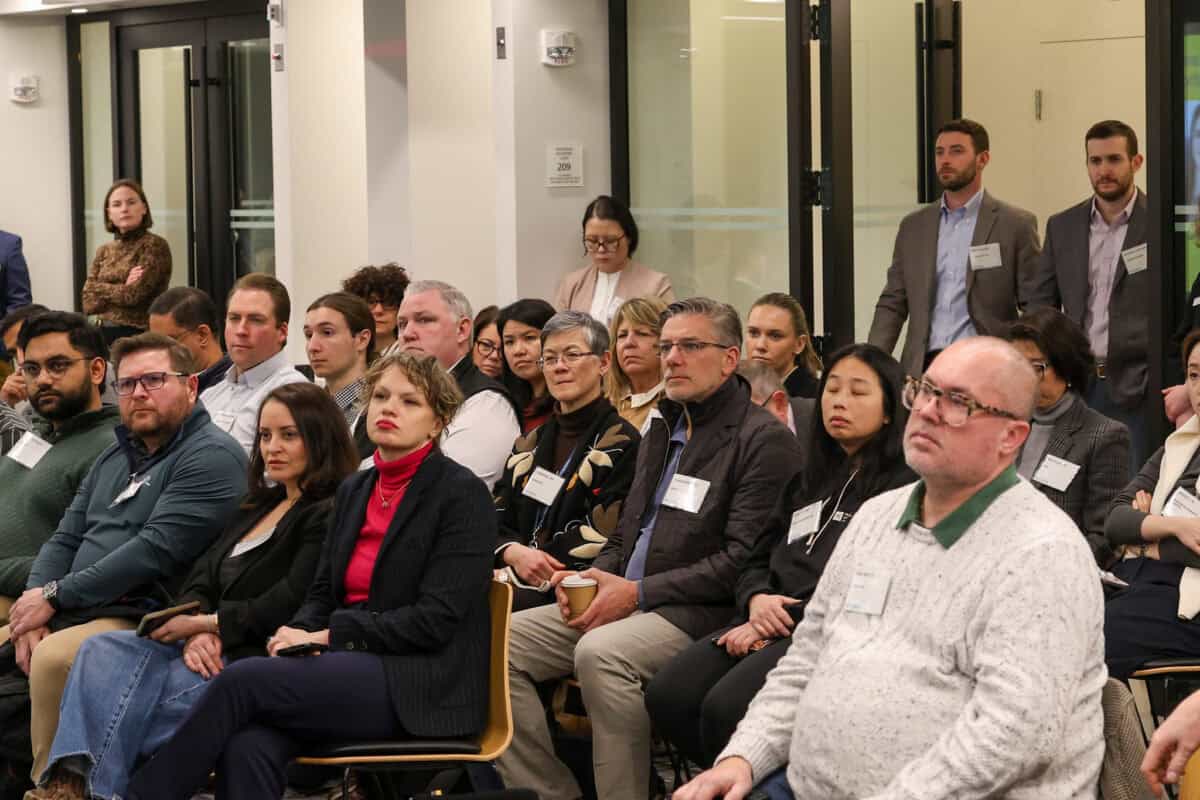
Full house for MassBio’s 2026 Economic Outlook Forum held in the MassBioHub.