Press Release: 1/14/2026
Healey-Driscoll Administration Awards Over $2 Million for Salt Marsh Restoration and Monitoring
FOR IMMEDIATE RELEASE:
1/13/2026
MEDIA CONTACT
Lauren Moreschi, Director of Communications
Phone
Call Lauren Moreschi, Director of Communications at 857-443-1218
Online
Email Lauren Moreschi, Director of Communications at lauren.moreschi2@mass.gov
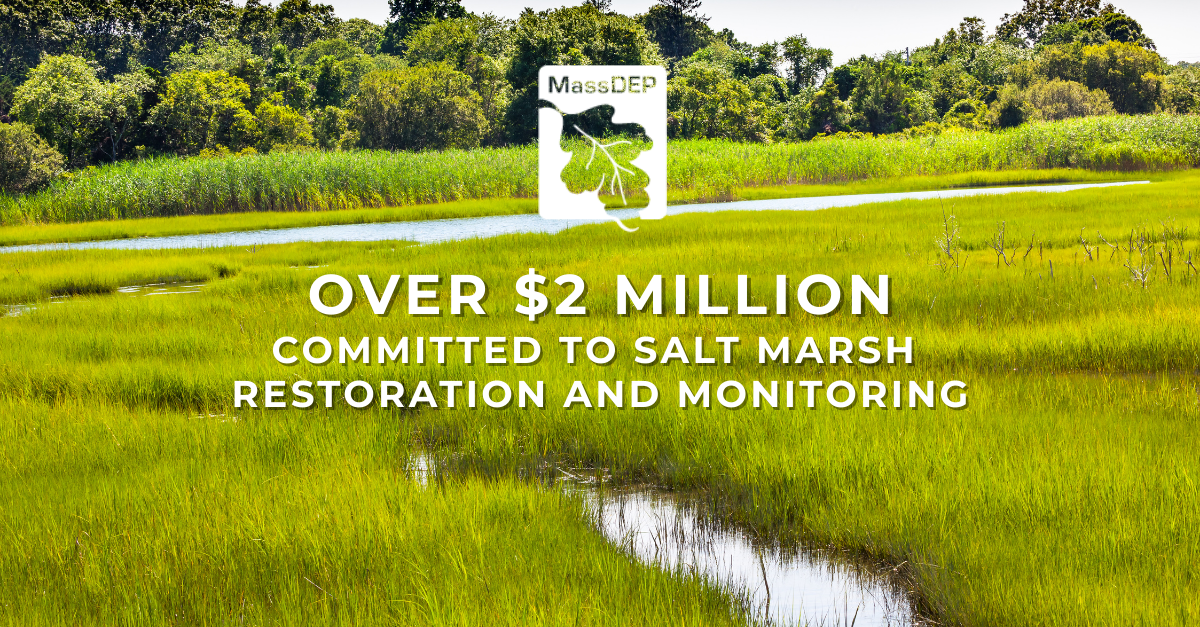
BOSTON — The Healey-Driscoll Administration today announced more than $2 million in new funding to restore and monitor salt marshes along the Massachusetts’ coastline. Salt marshes protect communities from flooding, prevent damage from storms and rising seas, serve as habitat for fisheries and wildlife, and absorb carbon that would otherwise contribute to climate change.
“Salt marshes are a defining feature of the iconic Massachusetts coastline, which is why we made expediting these projects a core provision of the Mass Ready Act,” said Energy and Environmental Affairs Secretary Rebecca Tepper. “Salt marshes are powerful natural defenses—absorbing floodwaters, reducing storm surge, and protecting our communities during extreme weather events. Preserving and restoring these vital ecosystems is essential to building a more resilient Massachusetts.”
“The actions we take today to protect our salt marshes will affect our climate resilience for generations,” said Climate Chief Melissa Hoffer. “These restoration and monitoring efforts will create a stronger, living ecosystem that will defend our communities against harsh storms and flooding. This funding goes a long way toward protecting natural resources and addressing climate change.”
The Salt Marsh Restoration and Monitoring grants, administered by the Massachusetts Department of Environmental Protection (MassDEP), will support seven projects to restore and monitor degraded salt marsh ecosystems. The resulting data will help identify particularly effective restoration techniques, and combinations of techniques, to inform future restoration efforts and investment.
“Salt marshes play a vital role in filtering pollutants, improving water quality, and protecting the health of our ecosystems and communities,” said MassDEP Commissioner Bonnie Heiple. “We’re grateful to the many partners who have long prioritized protection and restoration of these unique ecosystems and look forward to ongoing work together to ensure salt marshes can perform these critical functions for generations to come.”
The following grant proposals were selected for funding:
Mass Audubon (Eastham) – $308,346
- Baseline Conditions Assessment and Design of Salt Marsh Restoration in Eastham
Buzzards Bay Coalition (Buzzards Bay) – $392,029
- Post-restoration Monitoring and Adaptive Management in Multiple Locations in Buzzards Bay
Association to Preserve Cape Cod (Dennis and Falmouth) – $341,360
- Permit Ready Designs and Pre-restoration Conditions Assessment for Removal of Tidal Restrictions in Two Salt Marshes on Cape Cod
Boston University – Fulweiler Lab (Newbury, Essex, Ipswich) – $389,079
- Study to Measure CO2 Flux in Restored Salt Marshes in the Great Marsh
Mystic River Watershed Association (Boston) – $40,000
- Permitting of Salt Marsh Restoration at Belle Isle Marsh
Northeastern University (North Shore and Buzzards Bay) – $229,197
- Study of Salt Marsh Elevation, Soil Chemistry, and Restoration Success in the Great Marsh and Buzzards Bay
The Trustees (Newbury, Essex, Ipswich) – $330,000
- Post-Restoration Monitoring of Salt Marsh Restoration in the Great Marsh
These grants are the latest step in the Healey-Driscoll Administration’s work to promote resilience and support ecological restoration projects. Other recent initiatives have included streamlined provisions for permitting restoration projects in the Mass Ready Act and MassDEP’s issuance of guidance documents to promote salt marsh restoration. Additionally, these projects support the Massachusetts Biodiversity Goals, which name salt marsh restoration as a priority, and the Department of Fish & Game’s Blue Carbon Program, which is exploring financial incentives to drive protection of these critical habitats to help the state meet its net-zero goals.
Statements of Support:
Senate Minority Leader Bruce Tarr (R - Gloucester):
"Marshes are important resources that provide valuable habitat, efficient carbon sequestration, and extremely effective natural defenses against the powerful forces of coastal storms. These benefits, however, depend directly on marshlands being healthy and capable of outpacing such threats as those posed by invasive species, rising sea levels, and increased absorption of carbon. This grant funding is an important investment in the stewardship of the marshes that provide critical protection for our environment and our seaside communities."
State Representative Kristin Kassner (D - Hamilton):
"Salt marsh restoration is key to coastal resilience. The Great Marsh helps to store massive amounts of carbon, reduce flooding, and support fisheries and biodiversity. These ecosystems are disappearing rapidly, making restoration an urgent climate‑resilience priority for Massachusetts. Thank you to MassDEP for recognizing and investing in these important projects for our region."